This material was developed as part of an information campaign to raise awareness among healthcare professionals about the opportunities and practical application of telemedicine in HIV services and services for key populations.
Access to Care Wherever the Patient Is
For people living with HIV (PLHIV), continuous access to healthcare is essential for effective treatment, maintaining adherence to antiretroviral therapy (ART), and preserving quality of life. For people at increased risk of acquiring HIV, timely access to testing, HIV pre-exposure prophylaxis (PrEP), counselling, and other prevention services is equally important.
At the same time, access to these services may be complicated by distance from a healthcare facility, displacement, limited mobility, a shortage of relevant specialists in the patient’s current location, time and financial costs, as well as stigma or concerns about confidentiality.
Telemedicine does not eliminate all of these barriers, but it can significantly reduce some of them by providing an additional channel of communication between patients and healthcare professionals.
Continuity of Treatment and Medical Care
For PLHIV, telemedicine consultations can be particularly useful between in-person visits.
ART adherence, treatment tolerability, results of completed examinations, coexisting health conditions, the need to consult another specialist, and further follow-up plans can all be discussed remotely.
This is particularly relevant when a patient has moved to a different location or temporarily does not have access to their usual healthcare facility.
Regular contact with a healthcare professional also makes it possible to identify difficulties that may affect treatment adherence at an earlier stage and to work with the patient to determine the appropriate next steps.
Telemedicine as an Additional Pathway to PrEP
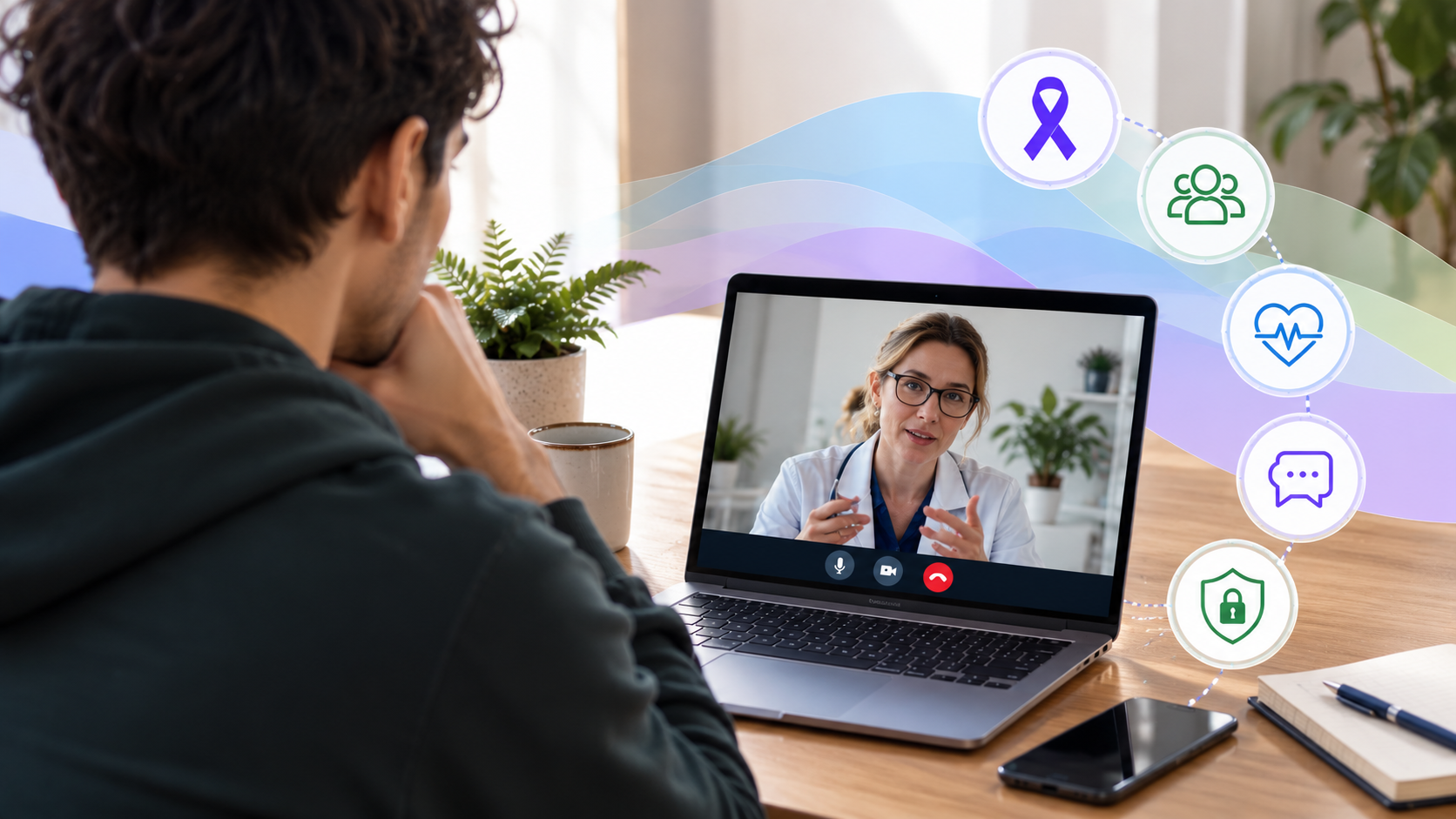
Telemedicine consultations can support not only HIV treatment but also HIV prevention.
For someone interested in PrEP, an online consultation with a doctor can be the first step. During the consultation, the person can discuss their individual circumstances, receive information about PrEP and the necessary examinations, and learn about the next steps in accessing the service.
Remote consultations can also be used for the ongoing support of PrEP users, including discussions about adherence, medication tolerability, and the need for regular testing and monitoring.
At the same time, telemedicine consultations do not replace necessary clinical and laboratory examinations. PrEP initiation and continuation should take place in accordance with current clinical guidelines.
Confidentiality and Reducing Stigma-Related Barriers
For PLHIV and members of key populations, not only the availability of healthcare but also the conditions in which it is provided are important.
The option to seek care remotely may be more convenient for people who are concerned about stigma, discrimination, or the disclosure of confidential information when visiting a healthcare facility.
At the same time, the remote format does not guarantee confidentiality on its own. Healthcare professionals should use appropriate communication tools and make sure that the patient is able to discuss health-related matters safely and privately.
Non-discriminatory communication, respect for the individual, and avoiding assumptions about a person’s behaviour, sexual orientation, gender identity, or lifestyle are particularly important.
More Opportunities for Comprehensive Care
The healthcare needs of a person living with HIV are often not limited to ART. They may also need to consult a family doctor, psychologist, psychiatrist, dermatovenereologist, gynaecologist, endocrinologist, or another specialist.
Telemedicine can facilitate access to these consultations, particularly when the required specialist is not available in the patient’s current location.
It can also support patient navigation by helping determine which specialist or service a person needs and when a remote consultation is no longer sufficient.
When Is an In-Person Visit Necessary?
One of the key principles of the safe use of telemedicine is understanding its limitations.
Remote consultations should not be used as a substitute for in-person care when a physical examination, laboratory or instrumental diagnostics, a medical procedure, or urgent intervention is required.
The decision regarding the appropriate consultation format should be based on the clinical situation, the information available, and the healthcare professional’s clinical judgement.
For this reason, a hybrid model in which online and in-person services complement one another is often the most practical approach.
Digital Barriers Should Not Be Overlooked
Telemedicine can improve access to healthcare, but it is important to recognise that not all patients have equal access to the internet, digital devices, or a private space in which to have a consultation.
The development of remote services should therefore include simple registration processes, clear instructions, accessible technical support, and the continued availability of in-person care.
Telemedicine as Part of Person-Centred Care
The value of telemedicine goes beyond simply being able to conduct a consultation through a screen.
For PLHIV and key populations, it can mean easier access to a doctor, the ability to remain connected with healthcare professionals throughout treatment or prevention, access to consultations regardless of location, and faster navigation to the services they need.
Telemedicine has the greatest impact when it forms part of a comprehensive patient pathway and is integrated with in-person care, laboratory diagnostics, prevention, treatment, and ongoing medical support.
A practical example of this approach in Ukraine is the Help24 TeleHealth Online Clinic (h24.org.ua), where people living with HIV and members of key populations can receive free and confidential online consultations with healthcare professionals, including consultations on HIV treatment, PrEP, prevention, and ongoing medical care.
Sources
- World Health Organization. Global Strategy on Digital Health 2020–2027.
- World Health Organization. Recommendations on Digital Interventions for Health System Strengthening.
- World Health Organization. Consolidated Guidelines on HIV, Viral Hepatitis and STI Prevention, Diagnosis, Treatment and Care for Key Populations. 2022.
- World Health Organization. Consolidated Guidelines on HIV Prevention, Testing, Treatment, Service Delivery and Monitoring.
- European AIDS Clinical Society. EACS Guidelines.