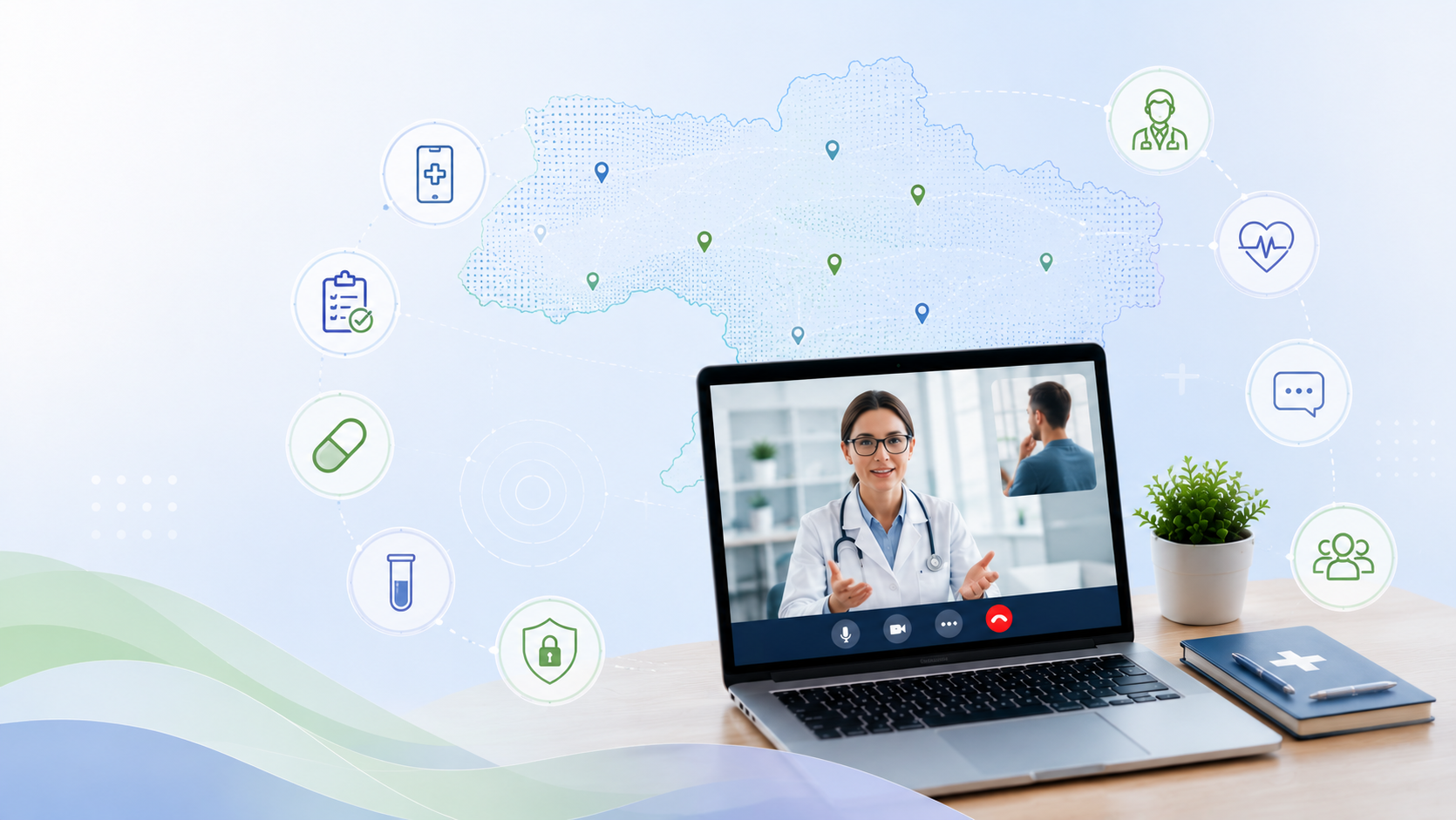
This material was prepared as part of an information campaign aimed at increasing healthcare professionals’ awareness of the opportunities and practical application of telemedicine in HIV services and services for key populations.
Telemedicine as a Tool for Expanding Access to HIV Services
The development of digital technologies and changes in approaches to healthcare delivery have contributed to the active implementation of telemedicine in many countries. In the field of HIV services, telemedicine offers additional opportunities to ensure continuity of care, support adherence to treatment, and improve access to healthcare services for people living with HIV and members of key populations.
The World Health Organization considers digital health solutions and telemedicine important tools for strengthening health systems and improving access to healthcare. Experience gained in recent years, particularly during the COVID-19 pandemic and in humanitarian crisis settings, has demonstrated the value of remote consultations as an additional mechanism for supporting people with chronic health conditions, including HIV.
What Opportunities Does Telemedicine Offer for HIV Services?
Telemedicine does not replace conventional forms of healthcare. However, it can effectively complement them at different stages of service delivery.
In the context of HIV services, remote consultations may be used for:
- conducting follow-up consultations with clinically stable patients;
- monitoring adherence to antiretroviral therapy;
- providing counselling on pre-exposure prophylaxis, or PrEP, including an initial assessment of needs, follow-up support for PrEP users, and adherence monitoring;
- referring people interested in PrEP for HIV testing, clinical assessment, and other examinations required under applicable clinical protocols;
- providing counselling on HIV prevention and sexually transmitted infections;
- providing psychological support;
- offering consultations on coexisting health conditions;
- referring patients to appropriate medical, social, and community-based services;
- facilitating multidisciplinary cooperation among healthcare professionals from different specialties;
- providing continued remote follow-up and supporting continuity of care between in-person visits.
Telemedicine is particularly important for people living in remote areas, those who frequently change their place of residence, people with limited mobility, and those who may experience stigma or discrimination when seeking healthcare.
Benefits for Healthcare Professionals
The use of telemedicine tools can contribute to more efficient work by healthcare professionals and healthcare institutions.
Key benefits include:
- maintaining continuity of communication with patients;
- providing timely consultations between in-person visits;
- reducing the number of missed consultations;
- improving access to services for specific groups of patients;
- involving multidisciplinary teams in patient care;
- optimising the use of healthcare professionals’ time and available resources.
In many situations, remote consultations can address issues that do not require a physical examination or diagnostic procedure, while maintaining appropriate standards of clinical support.
Telemedicine and Work with Key Populations
Confidentiality, safety, and comfortable access to healthcare services are particularly important for members of key populations. Telemedicine solutions can help reduce some of the barriers associated with stigma, fear of disclosure, or limited access to specialised services.
At the same time, successful use of telemedicine requires adherence to the principles of voluntary participation, confidentiality, personal data protection, informed consent, and person-centred care.
Healthcare professionals should also assess whether the patient has a private and safe environment for the consultation and whether remote communication may create any risk of unintentional disclosure of confidential information.
Limitations and Challenges
Despite its advantages, telemedicine has certain limitations. Some clinical situations require a physical examination, laboratory testing, diagnostic procedures, or other interventions that cannot be provided remotely.
The implementation of telemedicine services also requires:
- reliable digital infrastructure;
- patient access to the internet and suitable digital devices;
- appropriate training for healthcare professionals;
- clear clinical and operational procedures;
- compliance with personal and medical data protection requirements;
- established referral pathways for in-person care.
Telemedicine consultations related to PrEP do not remove the need for HIV testing, laboratory monitoring, or other clinical assessments required before PrEP initiation and during follow-up.
For this reason, an integrated model combining in-person and remote services according to the clinical situation and the individual patient’s needs is generally the most effective approach.
Future Development
Telemedicine continues to develop in Ukraine as a promising area of healthcare system modernisation. Within HIV services, telemedicine can contribute to broader access to consultations, greater continuity of treatment and prevention, and improved interaction between patients and healthcare professionals.
Further development will require continuous improvement of the regulatory framework, investment in digital services, exchange of practical experience, and active involvement of the professional community in shaping modern models of healthcare delivery.
References
- World Health Organization. Global Strategy on Digital Health 2020–2025.
- World Health Organization. Recommendations on Digital Interventions for Health System Strengthening.
- European AIDS Clinical Society. EACS Guidelines.
- Centers for Disease Control and Prevention. Telehealth and HIV-related clinical resources.
- National legislation and clinical guidance regulating telemedicine, HIV treatment, and HIV prevention in Ukraine.